


|
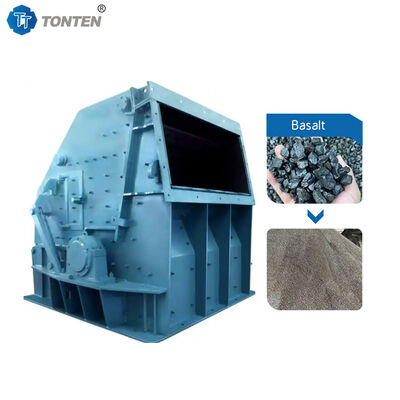
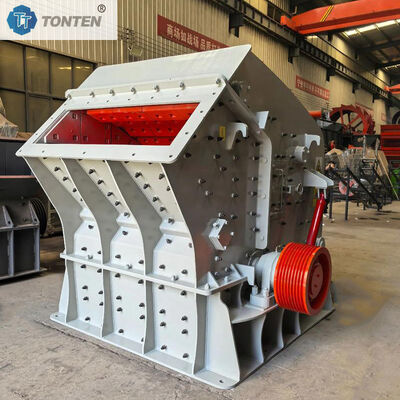
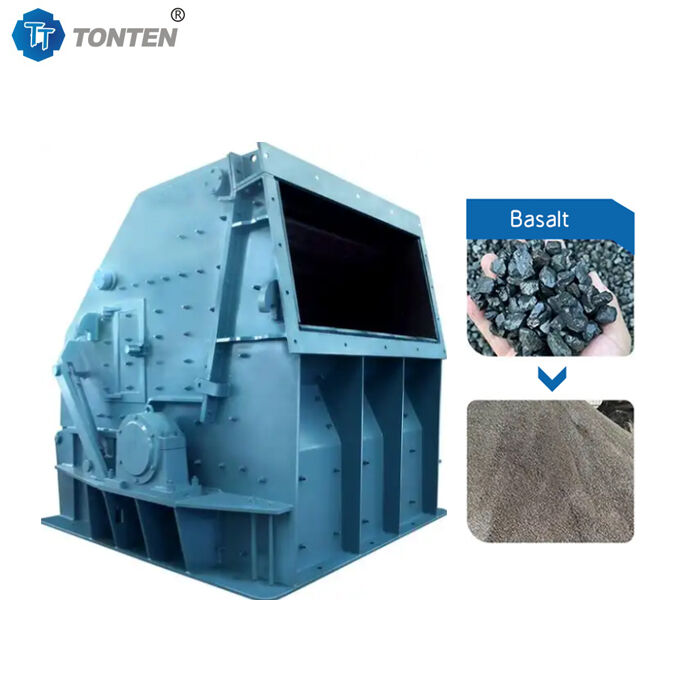
Construction Concrete Impact Crusher Machine Impact Crusher Crush Hard Rock
Product Details:
| Place of Origin: | China |
| Brand Name: | TONTEN |
| Model Number: | TPF-1010 |
Payment & Shipping Terms:
| Minimum Order Quantity: | 1 Set |
|---|---|
| Price: | 9000-9800USD |
| Packaging Details: | standard international export packing, container or as required |
| Delivery Time: | 7-15 work days |
| Payment Terms: | T/T |
| Supply Ability: | 30 sets/month |
|
Detail Information |
|||
| Name: | Construction Concrete Impact Crusher Machine | Yield: | 50-80t/hour |
|---|---|---|---|
| Power: | 55-75kw | Weight: | 12200kgs |
| Machine Size: | 2400x2250x2620mm | Max Feed Size: | 350mm |
| Feed Port Size: | 400-1080mm | Type Details: | 400x1080 |
Product Description
Construction Concrete Impact Crusher Machine Impact Crusher Crush Hard Rock
Introduction to Impact Crushers:
The impact crusher is a machine designed for medium and fine crushing by utilizing high-speed rotating blow bars to hurl material against impact plates, thereby achieving size reduction through impact energy and inter-particle collisions. It features a high reduction ratio, produces cubical finished products with minimal flaky or elongated particles, and offers a simple structure and easy adjustment; it is widely used for crushing materials such as limestone and construction waste, as well as for shaping high-quality aggregates.
Advantages:
1. Superior particle shape and gradation: TONTEN impact crushers deliver excellent shaping results and a high cubical particle yield, making them ideal for applications requiring strict aggregate shape standards, such as high-grade highways, railways, hydroelectric dams, and commercial concrete production.
2. High energy efficiency and cost-effectiveness: Energy consumption is approximately 20%–30% lower than that of inter-particle (compression-based) crushers like cone crushers; the machine's lighter weight reduces civil engineering and foundation costs, resulting in favorable initial investment and operating expenses.
3. Simplified process and compact production line: A high reduction ratio allows for the consolidation of secondary and tertiary crushing stages, reducing the need for screening and material recirculation while enhancing overall line capacity and operational continuity.
4. Suitability for mobile operations: Compact dimensions, low weight, and a highly integrated structure make these crushers easy to mount on wheeled or tracked mobile crushing stations, making them perfect for projects involving on-site construction waste processing, highway expansion/renovation, and other operations requiring mobility and frequent site relocation.
Working Principle of Impact Crusher (Cyclic Crushing via Impact, Rebound, and Re-impact)
High-speed Rotor Rotation: An electric motor drives the rotor to spin at high speed (typically 1,000–1,500 rpm) via V-belts or a coupling; blow bars made of high-chromium alloy or high-manganese steel are mounted on the rotor's periphery.
Initial Impact and Acceleration: Material enters the crushing chamber through the feed inlet and falls into the blow bar's operating zone. It is struck violently by the rapidly rotating blow bars, instantly gaining immense kinetic energy and being propelled toward the primary impact plate.
Repeated Crushing Cycles: After striking the impact plate, the material rebounds into the blow bar zone to be struck again. A continuous cycle of impact, collision, and attrition occurs between the blow bars, impact plates, and the material itself (typically involving two or three stages of impact chambers for coarse crushing, secondary crushing, and shaping, respectively).
Discharge and Particle Size Control: Material fractures progressively along its natural joint and cleavage planes. Once the particle size is smaller than the discharge gap between the impact plate and the rotor, the material is discharged from the bottom. The final particle size and shape can be flexibly controlled by adjusting the gap between the impact rack and the rotor (using mechanical screw mechanisms or hydraulics) or by varying the rotor speed.
Specifications:
| Model | Specification | Feed size | Motor power | Weight | Dimension | Capacity |
| TPF-1007 | 1000x700 | 400x730mm | 37-55kw | 9500kgs | 2400x1558x2660mm | 30-50t/hour |
| TPF-1010 | 1000x1050 | 400x1080mm | 55-75kw | 12200kgs | 2400x2250x2620mm | 50-80t/hour |
| TPF-1210 | 1250x1050 | 400x1080mm | 110-132kw | 14900kgs | 2690x2338x2890mm | 70-120t/hour |
| TPF-1214 | 1250x1400 | 400x1430mm | 132-160kw | 18600kgs | 2690x2668x2890mm | 110-180t/hour |
| TPF-1315 | 1320x1500 | 860x1520mm | 180-260kw | 19300kgs | 3096x3273x2667mm | 160-250t/hour |
| TPF-1320 | 1320x2000 | 860x2030mm | 300-375kw | 28000kgs | 3096x3560x3185mm | 160-350t/hour |
| TPF-1520 | 1500x2000 | 1315x2040mm | 400-450kw | 42800kgs | 3890x3560x3220mm | 300-500t/hour |
