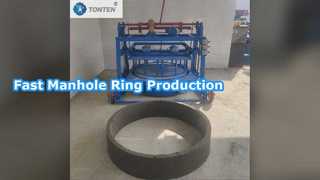
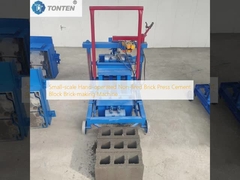
Brief: This video explains the main functions and practical uses of the Automated Well Ring Machine in a clear, step-by-step format. You will see a detailed walkthrough of its automated operation, from raw material feeding to vibration molding, and learn how it efficiently produces various concrete well rings and bricks for construction projects.
Related Product Features:
High-efficiency production of multiple brick types and well ring specifications.
Fully automated operation via a PLC control system for enhanced safety and reduced manual labor.
Energy-saving design with advanced motor and hydraulic technology for low consumption.
Simple, modular structure for easy maintenance and quick part replacement.
Highly adjustable molds to quickly adapt to different well ring specifications.
Robust machine frame welded from high-strength steel for stability under heavy loads.
Uniform vibration molding ensures high brick density and consistent quality.
Automated feeding system using conveyor belts or hoppers boosts production efficiency.
FAQs:
What types of bricks can this machine produce?
The machine can produce various types including concrete bricks (e.g., 400x225x200), solid bricks (e.g., 240x115x53), and paver bricks (e.g., 200x100x60), with adjustable molds for different sizes and shapes.
How automated is the Concrete Well Ring Making Machine?
It features full automation through a PLC control system, handling tasks from automatic feeding to vibration molding, which minimizes manual operation and improves production safety and efficiency.
What are the main applications of this well ring machine?
It is widely used in urban construction for wall bricks and floor tiles, infrastructure projects like roads and bridges, and municipal engineering for drainage ditches and well ring bricks.
How does the machine ensure consistent brick quality?
A vibration device works with the hydraulic system to apply pressure and vibration, ensuring uniform molding and high density of the bricks for durable construction materials.